


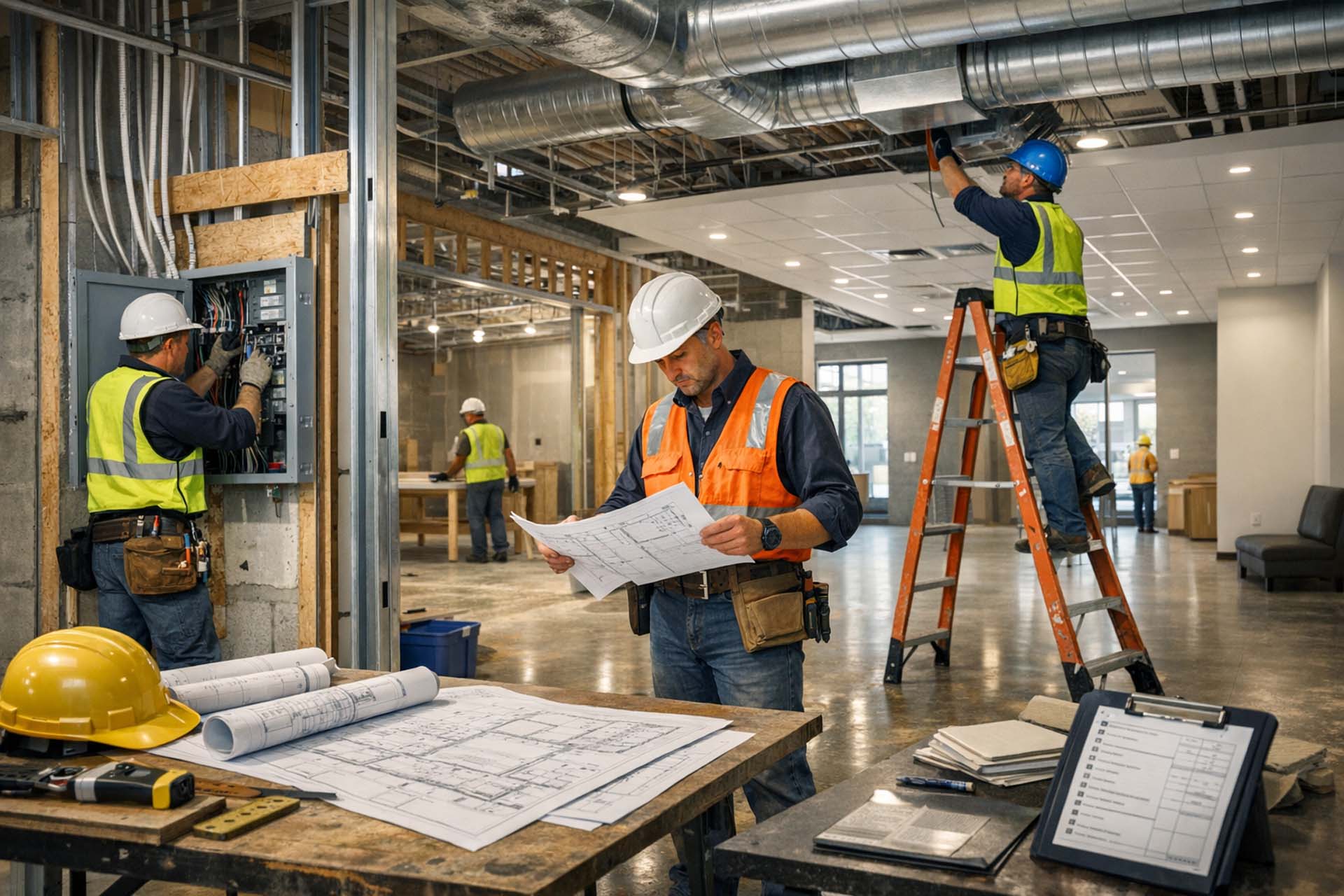
Tenant build-outs in Chicagoland require coordination, compliance, and consistent oversight. When timelines slip, the impact reaches beyond construction. Delays affect lease commencement, tenant satisfaction, and property revenue.
Most build-out challenges are not caused by one major failure. They are the result of small breakdowns in planning, permitting, inspections, or closeout coordination.
A structured process protects move-in dates and strengthens your reputation as a reliable property partner. Below is a practical framework designed to reduce permit delays, inspection rework, and turnover disruption.
Why Chicagoland Build-Outs Slip: The Most Common Timeline Disruptors
Build-out delays often stem from predictable issues. Recognizing them early allows you to prevent escalation.
Common timeline disruptors include:
- Incomplete permit submissions
- Unclear project scope or missing details
- Trade sequencing conflicts
- Inspection failures requiring rework
- Late material selections
- Change orders introduced mid-project
Municipal permitting and inspection processes in the Chicago area are detailed and compliance-focused. Missing documentation or unclear plans can stall approval.
At the same time, coordination gaps between trades can create inefficiencies. Electrical work delayed by framing changes or HVAC adjustments discovered late in the process often require corrective scheduling.
A proactive build-out plan anticipates these risks rather than reacting to them.
A Strong Pre-Permit Package: Clear Drawings and Coordinated Scope
The most effective way to protect a timeline is before permits are submitted.
A comprehensive pre-permit package should include:
- Finalized construction drawings
- Clear mechanical, electrical, and plumbing layouts
- Defined scope of work
- Confirmed material selections where required
- Coordinated trade review
Ambiguity at this stage creates downstream friction. If contractors interpret scope differently, change orders increase and inspections become more complex.
Pre-permit coordination meetings help align expectations between:
- Property management
- General contractors
- Subcontractors
- Design professionals
This early alignment reduces surprises during inspections and prevents scope gaps that trigger revision cycles.
In Chicagoland municipalities, a clean and complete submission shortens review time and reduces requests for clarification.
Inspection Readiness: What Fails Most Often and How to Prevent Rework
Inspection failures are one of the most significant causes of timeline extension.
Common areas that require rework include:
- Electrical panel labeling or load calculations
- Improperly supported conduit or wiring
- Incomplete fire-rated wall assemblies
- HVAC duct sealing or airflow balancing
- Plumbing venting or fixture spacing
These are not unusual mistakes. They are typically the result of rushed scheduling or incomplete pre-inspection review.
A structured inspection readiness protocol should include:
- Internal trade walkthroughs prior to official inspection
- Verification of life-safety components
- Confirmation of code-required clearances
- Documentation prepared and accessible on-site
Pre-inspection walkthroughs allow contractors to identify deficiencies before inspectors arrive. This protects both schedule and professional credibility.
Inspection readiness is not about passing once. It is about reducing uncertainty in the process.
Managing Change Orders Without Stopping Progress
Change orders are common in tenant build-outs. The key is managing them without derailing the schedule.
Scope changes typically occur when:
- Tenants revise layout preferences
- Equipment requirements shift
- Budget adjustments occur mid-project
- Field conditions differ from original assumptions
Uncontrolled change orders create confusion between trades and disrupt sequencing.
A disciplined process includes:
- Written scope clarification before work proceeds
- Clear cost and schedule impact documentation
- Defined approval channels
- Updated drawings distributed to all trades
Maintaining communication prevents parallel work from continuing under outdated plans.
Change management does not require halting progress. It requires coordination and documented decision-making.
When handled correctly, adjustments remain manageable rather than disruptive.
Closeout and Turnover: Protecting Move-In Dates
The final stage of a build-out is where many projects lose momentum.
Closeout requires more than finishing visible work. It involves operational readiness.
A structured closeout plan should include:
- Detailed punch list walkthroughs
- Confirmation of all code-required inspections
- Completion of life-safety systems testing
- Collection of warranties and O&M manuals
- Final cleaning and presentation readiness
Punch list coordination should occur early enough to allow corrections without compressing the move-in timeline.
Mechanical systems should be fully operational and tested prior to tenant walkthroughs. Thermostat functionality, lighting controls, and plumbing fixtures should operate as expected.
Providing organized documentation at turnover reinforces professionalism and supports future maintenance efficiency.
Move-in readiness is not just a construction milestone. It is a service commitment to the tenant.
A Predictable Build-Out Process That Protects Move-In Dates
In Chicagoland’s commercial environment, tenant expectations are high. Delays create operational pressure for property managers and financial strain for tenants.
A predictable build-out framework focuses on:
- Comprehensive pre-permit coordination
- Proactive inspection preparation
- Disciplined change order management
- Structured closeout documentation
- Clear communication throughout the project
Partnering with a reliable facility and construction support team simplifies oversight.
Services include:
- Pre-construction coordination and scope review
- Trade scheduling and sequencing support
- Inspection readiness walkthroughs
- Punch list management
- Mechanical, electrical, and plumbing coordination
- Ongoing facility maintenance after turnover
Consolidating services under one trusted partner reduces vendor fragmentation and improves accountability.
When trades are aligned and inspections are anticipated, timelines stabilize. Tenants gain confidence. Property managers reduce stress. Ownership protects revenue.
Get a Quote for Your Property
One team. Multiple services. Less hassle.
Umbrella Property Services supports commercial property managers and owners across Chicagoland with coordinated build-out services, preventative maintenance, and responsive facility support.
Tell us a little about your property and upcoming projects. We’ll follow up with a clear, no-pressure quote fast, designed to simplify your process and protect your move-in timelines.